Precision Lifting for High-Risk Tree Removals
Commercial crane tree services designed for challenging removals throughout Davenport and surrounding properties.
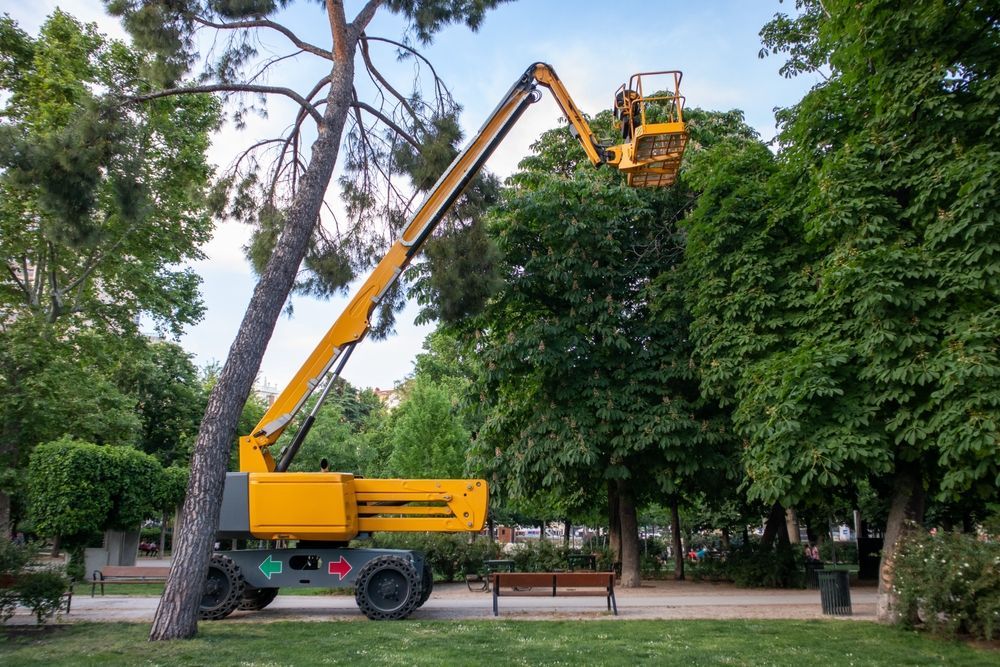
When you need to remove a massive oak leaning over your Davenport facility or a storm-damaged maple threatening utility lines, standard equipment often falls short. You face the reality of confined spaces, nearby buildings, and the kind of tree that cannot be felled in one piece without serious consequences. Commercial crane tree services give you the lifting capacity and controlled precision required to manage these high-stakes removals without compromising safety or damaging adjacent structures.Good Ol'Boys Tree Service coordinates crane operators and tree crews to execute removals that require lifting heavy sections vertically out of tight areas. This approach works for oversized trees, structurally compromised specimens, and emergency situations where traditional rigging cannot provide adequate control. The crane positions itself to lift cut sections away from buildings, roadways, and utilities while the ground crew manages rigging and debris. Service extends across a forty to fifty mile radius, covering commercial sites, municipal properties, and industrial facilities throughout the region.If your property requires crane-assisted removal or you need to assess whether standard methods will suffice, reach out to discuss the specifics of your Davenport site and tree conditions.
ow Crane Integration Changes the Removal Process
Crane services begin with site assessment to determine positioning, load capacity requirements, and clearance zones around your Davenport property. The crew identifies obstacles such as overhead wires, building overhangs, and access routes that dictate crane placement and rigging strategy. Once positioned, the crane operator and climbers coordinate each cut so that sections are lifted clear of hazards and lowered to a designated staging area.After the work concludes, you notice the absence of impact marks on pavement, intact fencing, and undamaged rooflines that would have been at risk with conventional felling. The job site returns to usable condition faster because controlled lifting eliminates the chaotic scatter of limbs and trunk sections typical of gravity-based removals. Liability exposure decreases significantly when precision equipment replaces guesswork.This method applies to planned development projects and emergency responses alike, though timing depends on crane availability and weather conditions. Crews do not operate cranes during high winds or icy conditions, and some sites require permits or utility coordination before work begins. The service does not include stump grinding or landscape restoration unless specified in advance, so plan for those elements separately if your project requires full site preparation.
That Come Up Before Scheduling
Property managers and facility owners often need clarity on logistics, cost factors, and timing before committing to crane-assisted removals, so the following questions address the practical concerns that affect scheduling and budgeting.
What determines whether a tree requires crane services?
Tree size, proximity to structures, and available access dictate the need for crane support. If a tree cannot be safely felled or rigged using ropes alone without risking property damage, a crane becomes necessary.
How long does a typical crane removal take?
Most crane removals take four to eight hours depending on tree size and complexity. Larger trees or those in heavily congested areas may require additional time for rigging and controlled sectioning.
What site conditions prevent crane access?
Soft ground, narrow access points, overhead obstructions, and inadequate clearance can limit crane positioning. The crew evaluates these factors during the initial site visit to determine feasibility.
Why does crane work cost more than standard removal?
You pay for specialized equipment, operator expertise, and the coordination required to execute controlled lifts. The added expense offsets the risk of structural damage and reduces overall project timelines.
How far in advance should crane services be scheduled?
Planned projects typically require one to two weeks notice to coordinate crane availability and crew schedules. Emergency storm response mobilizes faster, often within twenty-four to forty-eight hours depending on demand.
Good Ol'Boys Tree Service handles crane-assisted removals across commercial, municipal, and industrial properties within a forty to fifty mile radius of Davenport, including sites with restricted access and complex overhead constraints. If your property presents removal challenges that exceed standard rigging capacity, contact the team to schedule a site evaluation and discuss equipment requirements.